
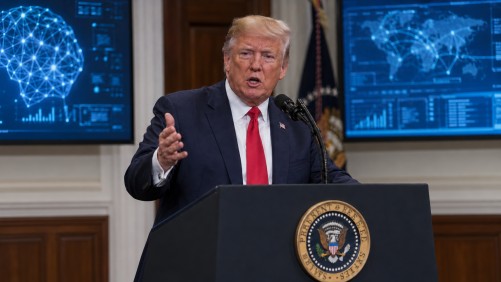
In a move to address the burgeoning influence of artificial intelligence, former U.S. President Donald Trump has announced plans to establish an “AI Force” and appoint an AI czar. This initiative aims to monitor the rapid advancements in AI technology amidst escalating concerns about its potential risks.
Trump likened the proposed AI force to the U.S. Space Force, although specific details regarding its structure and timeline remain sparse. The announcement comes as global governments and tech leaders face mounting pressure to balance AI innovation with the need for safety and regulation.
While Trump has historically resisted extensive AI regulation, arguing that it might hinder U.S. innovation and cede advantage to China, he emphasized in a social media post that his administration would not impede the industry’s growth. He suggested that existing legal frameworks could address any irresponsible uses of AI.
The development follows international discussions on AI safety, especially concerning increasingly autonomous AI agents. Industry experts have warned against the potential dangers of advanced AI systems operating with minimal human oversight and have called for more stringent safety measures.
Adding to the dialogue, California Governor Gavin Newsom recently announced a panel to explore AI safety regulations, including mechanisms for disabling AI systems that deviate from their intended purposes. Meanwhile, Republican figures like Florida Governor Ron DeSantis and Utah Governor Spencer Cox have advocated for stronger AI oversight and restrictions on technology transfers to China.
Trump’s announcement underscores the ongoing policy debate in the U.S. on reconciling the need for AI innovation with economic competitiveness and public safety. The proposed federal AI initiatives reflect the broader concerns about maintaining American leadership in the sector while addressing the potential risks associated with AI technologies.