
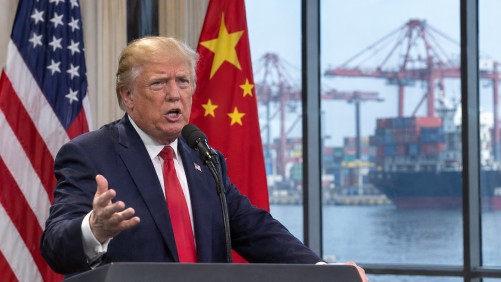
The Trump administration is set to introduce new tariffs targeting imports from 16 major trading partners, as part of efforts to address what it views as excessive industrial capacity in global markets. This move is anticipated to escalate trade tensions, particularly between the United States and China, as the latter remains a significant focus due to its growing trade surplus, which could surpass $1 trillion by 2026.
The proposed tariffs aim to impact economies including China, India, Japan, South Korea, Mexico, Vietnam, Taiwan, Thailand, Malaysia, Indonesia, Switzerland, Norway, Singapore, Bangladesh, Cambodia, and the European Union. The measures are expected to be country-specific rather than uniform, respecting existing tariff agreements such as a 15% ceiling for the European Union, Japan, and South Korea, and a 19% limit for Malaysia. For Chinese goods, additional tariffs are expected to remain capped at 20% under the current trade agreement, provided the existing trade truce holds.
These tariff plans are linked to investigations under Section 301 of the Trade Act of 1974, conducted by the US Trade Representative. The investigations assess whether foreign industrial policies provide unfair competitive advantages to overseas manufacturers. The Trump administration has particularly criticized China’s production in sectors such as steel, aluminium, electric vehicles, household appliances, and solar products, citing concerns that excessive exports could challenge American industries.
China, in response, has dismissed the US claims of industrial overcapacity as a pretext for political interference. Beijing has urged both countries to maintain stable economic and trade relations to prevent further disputes. The investigation also reviews Chinese investments in Southeast Asian nations like Vietnam, Indonesia, and Cambodia, evaluating whether manufacturing operations there might be used to bypass existing US tariffs.
The proposed measures intend to bolster US trade protections and address concerns over foreign competition. However, they may introduce additional uncertainty for international businesses and global supply chains. As these developments unfold, the international community watches closely, aware of the potential ripple effects on global trade dynamics.