
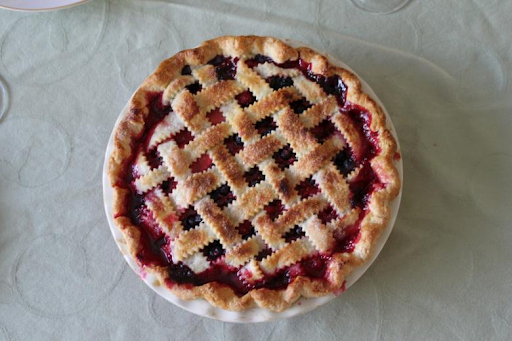
You might be surprised to see baking powder in a recipe for a shortcrust pastry like pasta frolla. After all, you don’t want the crust to rise like a cake. However, the tiny quarter-teaspoon of baking powder in this crostata recipe plays a subtle but important role in perfecting the texture.
The purpose of the baking powder here is not to provide significant lift, but rather to create a more tender and delicate crumb. As the tart bakes, the baking powder releases a small amount of carbon dioxide gas. These tiny gas bubbles get trapped in the dough, creating a slightly more open and aerated structure.
This subtle leavening action helps to prevent the rich, dense pastry from becoming too heavy or hard. It “shortens” the texture even further, contributing to that desirable melt-in-your-mouth quality. It makes the final crust lighter and less compact than it would be without it.
The amount used is very small to ensure it doesn’t cause the pastry to puff up or lose its shape. You won’t see a visible rise, but you will notice the difference in the final texture—it will be just a little bit lighter, a little bit crisper, and a little bit more tender.
While you can omit the baking powder if you don’t have it, its inclusion is a small, professional touch that helps to guarantee a perfectly light and crumbly pasta frolla every time.