
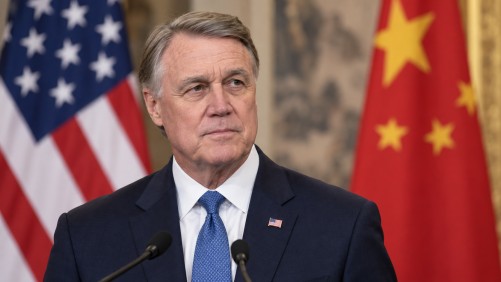
The United States is facing a challenging path in its relationship with China, despite recent diplomatic overtures, according to US Ambassador to China David Perdue. Following Chinese President Xi Jinping’s meeting with US President Donald Trump, Perdue emphasized the need for the US to reduce its reliance on China for critical sectors such as rare earth elements, magnets, pharmaceuticals, and commercial shipbuilding.
Perdue’s comments come in the wake of Xi’s three-day visit to the US, which included high-profile discussions and resulted in agreements on several economic issues. However, major differences between Washington and Beijing persist, underscoring the complexities of their bilateral ties. Perdue described the US dependence on Chinese supply chains as a significant concern, particularly in industries crucial to defense, automobiles, electronics, and renewable energy.
China characterized the summit as a move towards a more stable and constructive relationship, emphasizing respect, fairness, and reciprocity. Xi acknowledged that challenges would remain, but expressed a commitment to ongoing dialogue. Despite this optimistic outlook, Perdue’s remarks highlight Washington’s strategic concerns, particularly regarding China’s dominance in strategic supply chains.
The US has been actively seeking to diversify its supply chains to mitigate potential disruptions from China. This strategic pivot reflects broader efforts to address sensitive issues in the US-China relationship, including technology, trade, Taiwan, and Iran. While the summit has set the stage for continued negotiations, it has not resolved the deeper strategic differences between the two nations.