
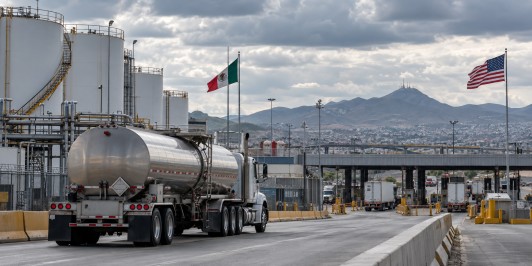
Mexico is grappling with potential disruptions in diesel supply as the U.S. considers restricting diesel exports, a move supported by President Donald Trump amid rising energy prices. Mexico, which depends on the United States for over 40% of its diesel consumption, could face significant challenges in maintaining its fuel supply.
Data from June 2026 shows that Mexico imported an average of approximately 288,000 barrels of U.S. diesel daily. Experts in the fuel sector caution that any interruption could compel Mexico to seek diesel from more distant sources, driving up transportation costs and exerting upward pressure on prices and inflation, which could impact key sectors like transportation, agriculture, and mining.
In the wake of these developments, Mexican President Claudia Sheinbaum has assured the public of adequate domestic production capacity. She emphasized ongoing government support for diesel prices and highlighted the contributions of the country’s refinery network, including the Dos Bocas facility in Tabasco, to domestic fuel production.
To mitigate potential shortages, the Mexican government has maintained fuel subsidies and implemented a voluntary price agreement with fuel retailers. Additional tax measures and government assistance are in place to buffer against the effects of rising global energy costs.
Energy experts urge Mexico to bolster its preparedness for possible supply disruptions. Suggested measures include diversifying diesel import sources, enhancing domestic refining capabilities, and increasing fuel storage capacity. As uncertainty looms over U.S. energy policies and global fuel supplies, Mexico is keen to lessen its vulnerability to disruptions from its primary diesel supplier.