
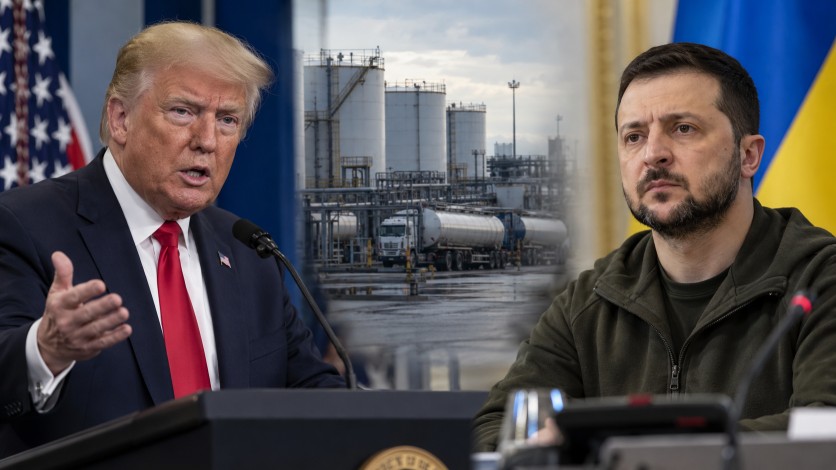
US President Donald Trump has criticized Ukrainian President Volodymyr Zelenskyy, suggesting that Ukraine needs a “new leader” to negotiate an end to its ongoing conflict with Russia. Trump’s comments followed his announcement of a new agreement to purchase significant quantities of Russian diesel, a decision that has sparked backlash from Kyiv and European allies.
Trump argued that Zelenskyy had missed opportunities for peace talks with Russia, implying that a change in leadership could facilitate a resolution. This stance has added tension to the already strained relations between the United States and Ukraine as diplomatic efforts to resolve the war remain fraught with challenges.
President Zelenskyy condemned the diesel deal, warning that easing sanctions on Russian energy exports would provide Moscow with additional funds to support its military operations. He described the agreement as a benefit to Russian President Vladimir Putin and suggested that increased energy revenues could enable Russia to prolong its offensive. Zelenskyy linked this development to renewed Russian attacks on Ukrainian civilian areas, including deadly strikes on the city of Zaporizhzhia.
European governments have also expressed concerns about the diesel agreement, fearing it could undermine the effectiveness of sanctions imposed since Russia’s invasion of Ukraine. European leaders, including those from Germany and Sweden, have reiterated their commitment to maintaining economic pressure on Russia and are considering further restrictions targeting those linked to the war effort.
A significant point of contention between Trump and Zelenskyy is Ukraine’s strategy of targeting Russian oil refineries with long-range attacks. While Trump claims these actions exacerbate global fuel supply issues, Zelenskyy argues that such measures are necessary to weaken Russia’s war financing capabilities.
Reports have suggested that the US has considered limiting intelligence-sharing with Ukraine if it continues targeting Russian energy infrastructures, potentially complicating Ukraine’s defense operations. The disagreement underscores the growing divisions among Ukraine’s international partners on how best to end the conflict, with Washington pushing for economic and diplomatic solutions, while Kyiv insists on measures that prevent Moscow from leveraging additional resources for its military campaign.