
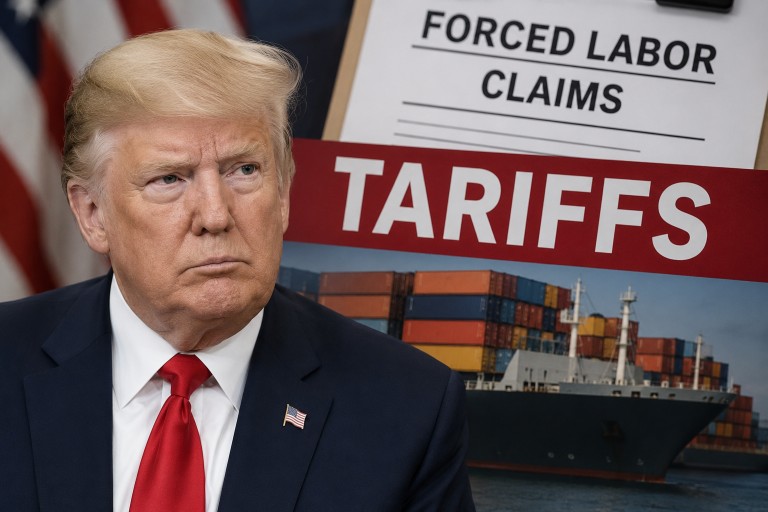
President Donald Trump is under fire following the introduction of new tariffs on imports from over 80 countries, including major allies like the United Kingdom, European Union members, Canada, and Mexico, as well as Australia, India, and China. These tariffs, which range from 10% to 12.5%, have sparked criticism as they are justified by the administration as a move against forced labor. Utilizing Section 301 of the Trade Act of 1974, the administration argues that the tariffs are a necessary step to address unfair trade practices linked to forced labor, a stance which has not gone uncontested.
The US Trade Representative, Jamieson Greer, defended the decision, emphasizing the failure of many countries to effectively prevent goods produced by forced labor from infiltrating global supply chains. The administration maintains that these measures are about urging trading partners to clamp down on such practices. Nonetheless, Democratic lawmakers have voiced strong opposition, suggesting that serious issues like forced labor should not be exploited to justify sweeping tariff policies. Representative Richard Neal emphasized the global importance of addressing forced labor, while Representative Linda Sánchez questioned the rationale behind imposing similar tariff rates on countries with robust labor protections as those criticized for forced labor.
This latest round of tariffs follows previous Trump-era tariffs that faced legal hurdles, with courts ruling that some exceeded presidential authority. Although the administration has adopted a different legal approach this time, experts predict further legal challenges are likely. The tariffs also raise concerns about economic repercussions, with critics warning of potential cost increases for American consumers. Senate Democratic leader Chuck Schumer highlighted the added financial strain on households already grappling with inflation, and Representative Brendan Boyle likened the tariffs to an additional tax on consumers.
Public opinion surveys indicate that many Americans attribute rising prices to tariffs, despite the Trump administration’s assertion that its trade policies benefit American industries and workers. The response to the tariffs among Republicans has been mixed. While some lawmakers support the tariffs as necessary for combating unfair trade practices, others worry about the potential for increased import costs leading to higher prices for consumers in the United States.