
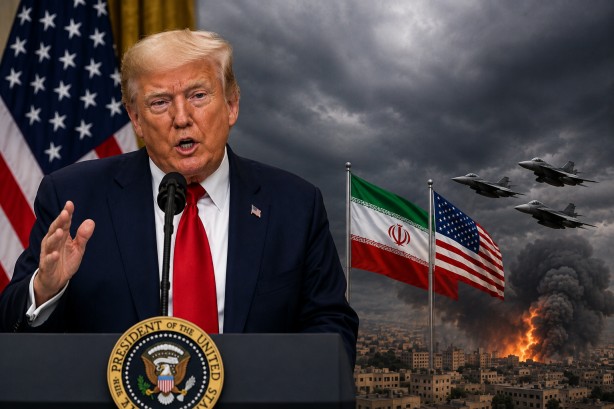
President Donald Trump revealed that the United States was on the brink of launching what he termed the “biggest attack since World War II” against Iran. This military action was halted following requests from several Gulf countries and Iran itself, which advocated for continued diplomatic negotiations. The decision was shared by Trump while aboard Air Force One, emphasizing that Saudi Arabia, the United Arab Emirates, Qatar, and Iran all urged the U.S. to delay any military intervention, expressing optimism about reaching a diplomatic agreement.
The proposed agreement, according to Trump, would focus on two primary objectives: reopening the critical Strait of Hormuz and advancing Iran’s denuclearization efforts. These components are seen as pivotal in alleviating tensions in the region and ensuring a more stable geopolitical landscape. Trump stressed the importance of achieving these goals through diplomatic means, stating that the U.S. would temporarily refrain from military action as negotiations progress.
During his remarks, Trump highlighted his preference for diplomacy over conflict, underscoring that any potential agreement must include the immediate reopening of the Strait of Hormuz, a vital passage for global oil shipments, and a definitive end to Iran’s nuclear ambitions. The decision to cancel the planned military strike is contingent upon the success of these ongoing diplomatic efforts.
In a post on the social media platform Truth Social, Trump reiterated his stance, stating that while the planned attack has been called off for now, the U.S. remains prepared to reassess its options based on the outcomes of the negotiations. His comments suggest a cautious yet hopeful approach, balancing the potential for peace with the readiness to act if necessary.