
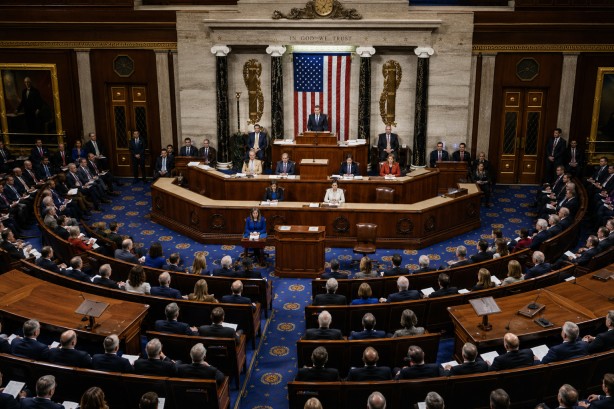
The U.S. House of Representatives has advanced a significant defense spending measure, approving the $1.15 trillion National Defense Authorization Act (NDAA) with a narrow 216-212 vote. The bill, which largely followed party lines, now heads to the Senate for further deliberation. It proposes a 5% to 7% pay increase for military personnel and allocates substantial funds to bolster the U.S. armed forces, aiming to modernize and strengthen national defense capabilities.
Despite its passage, the bill has sparked intense debate and division, primarily over its provisions and the broader context of U.S. military policy. Republican leaders emphasize the necessity of this legislation for national security enhancements, while most Democrats criticize the allocation, arguing that defense spending is disproportionately high, especially when funding for domestic programs is being curtailed.
The context of the vote is further complicated by political tensions related to President Donald Trump’s recent military actions, particularly the strikes against Iran conducted without congressional approval. This move has raised concerns among some lawmakers about the U.S.’s expanding military presence in the Middle East.
Moreover, the bill has garnered criticism for including voting-related measures supported by Trump, such as stricter voter ID requirements and limitations on mail-in voting. Democrats argue that these provisions are inappropriate for a defense bill. The House also debated several amendments during the proceedings, including a failed attempt to end military aid to Ukraine and others addressing transgender military policies and defense healthcare, showcasing the contentious nature of the discussions.
In a related development, House Republicans have approved a budget framework that would authorize $73 billion for military operations involving Iran, a figure significantly lower than the Pentagon’s broader funding proposal. This decision adds another layer to the ongoing debates about the scope and direction of U.S. military engagement abroad.